When everyone can build software, what will software engineers build?
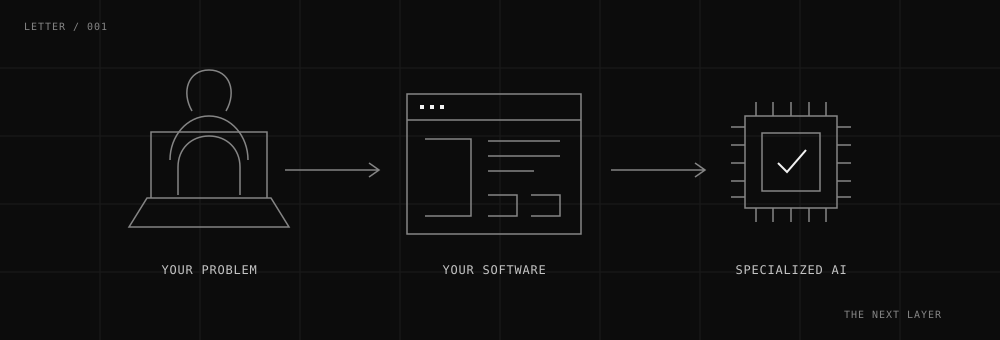
The average person will gain the ability to build software to solve their own problems. Software engineers, meanwhile, will increasingly work on making AI systems more capable, reliable, and efficient—including getting useful results from smaller, specialized models.
Three changes are driving this.
01You can learn what you need while building.
You have a problem: tracking rent, following up with customers, or bringing information from several apps into one place.
Previously, building a solution meant learning enough programming to get started—or hiring someone who already knew.
Coding agents change that starting point. You can describe the problem, give the agent the relevant documentation, and work through the implementation together. When something is unfamiliar, ask it to explain.

Software companies are making this easier, too. Stripe provides tools that let agents search its documentation and interact with its API. Shopify gives agents access to documentation, API schemas, and code validation.
The services you want to connect are increasingly being designed to work with your agent.
“I don’t know how” is becoming the beginning of the process.
02Engineering expertise is becoming something you can reuse.
Getting an application running is one step. Making it dependable involves testing, reviewing permissions, handling failures, and maintaining it.
Those practices are becoming accessible through the same agents that help you build.
Experienced engineers such as Matt Pocock and Lauren Tan publish reusable skills and workflows. These give agents structured approaches to planning, implementation, and review.
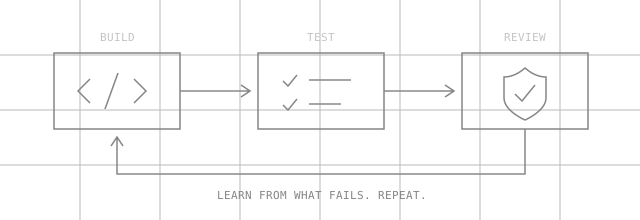
The tools themselves are adding more support. Claude Code has a security-review command. Codex Security provides repository scans and security reviews of proposed code changes.
Today, those checks still need verification. My long-term bet is that building secure, dependable software will become something ordinary people can delegate to AI.
You won’t need to personally master every engineering practice to benefit from it.
03Specialized models give engineers another place to create an advantage.
As ordinary software becomes easier to build, engineers can spend more effort improving the intelligence inside it.
A general-purpose model serves many needs. A specialized model can be trained around one task, using carefully selected examples and a clear way to measure success.
Tobi Lütke recently reported that Shopify fine-tuned a model with 800 million parameters that outperformed a much larger model on a narrowly defined task. It’s a company-reported result, but it illustrates the opportunity.

For an engineer, the challenge becomes: how much capability can you get from a smaller model? Can it meet the required quality while running faster, costing less, or operating on local hardware?
The advantage comes from understanding the task, preparing useful training data, measuring failures, and improving the system.
What comes next
The ability to build software will become part of everyday problem-solving. As more people create tools for their own needs, software engineers will push AI further—making it more capable, dependable, and efficient, including through smaller models built for specific tasks.
— Anand